- 2025
- Corporate website
Tregora is a leader in the field of raw materials trading and logistics
22.07.2026

Website personalization is the process of automatically adapting content, offers, and the interface to the needs of a specific visitor based on their behavior and business data. In 2026, this approach is a critical factor for the corporate sector, as it directly impacts LTV growth, increases audience loyalty, and maximizes the overall profitability of the resource.
Today, template pages with the same message for all visitors no longer deliver the expected financial results. Users expect relevant offers from the first seconds of interaction; otherwise, they instantly move on to competitors. A deep customer experience (CX) requires understanding the context of the visit: the person’s job title, previous transactions, and current business needs. Therefore, static solutions are rapidly losing their ability to convert traffic, forcing businesses to waste marketing budgets on empty clicks.
For B2B companies, stable lead generation is impossible without implementing adaptive blocks. A web resource should work like an experienced sales manager who instantly reads the request and offers the most appropriate solution. This exact approach turns cold traffic into qualified leads, significantly shortening the decision-making cycle and optimizing overall corporate website development costs in the long term.
Acquiring a new customer is always more expensive than closing a deal with an existing one. Therefore, the focus of C-level executives is shifting toward long-term cooperation, where dynamic content plays a key role. Displaying relevant related services, personalized commercial terms, or specialized case studies based on interaction history stimulates repeat inquiries. This level of digital service builds trust, directly impacting the retention rate.
Implementing adaptive solutions transforms the resource from a simple information board into a tool for building long-term relationships. A systematic increase in LTV is achieved through several key mechanics:
When a client sees that the company understands their needs without additional briefs, their loyalty predictably increases. This creates a strong barrier against switching to competitors. Investments in personalized functionality pay off by building a solid core of regular partners who generate the main share of profit throughout the entire lifecycle.
The cost of acquiring a qualified lead in the B2B segment is steadily rising. Therefore, executives and marketers are constantly seeking effective ways to optimize advertising budgets. Collecting and utilizing first-party data allows for transforming the standard approach to lead generation and precisely tuning communication from the very first second of a visit. Instead of vague promises, the resource demonstrates specific business benefits that address the pain points of a particular enterprise.
Deep micro-segmentation divides the overall traffic flow into narrow groups based on dozens of parameters: from the traffic source and geography to the company size or the decision-maker’s job title. This directly ensures a rapid reduction in CAC, as the bounce rate drops sharply. The visitor instantly finds confirmation of the contractor’s expertise specifically in their highly specialized niche. Consequently, the path from a cold click to substantive negotiations becomes significantly shorter.
Personalized offers noticeably accelerate the deal-closing cycle. A systematic increase in website conversion occurs not through aggressive design or manipulative copy, but solely due to the high relevance of the offer. The company stops wasting money on non-targeted impressions and maximizes the financial return on every hryvnia invested in traffic acquisition.
Providing a high level of personalization manually is impossible, especially when scaling a business. Modern platforms rely on powerful AI algorithms that analyze thousands of touchpoints in real time. The system automatically evaluates the context of the visit and decides exactly which text block, banner, value proposition, or relevant case study should be shown to the visitor right now.
Seamless consolidation of information from various databases is required for these algorithms to operate flawlessly. Here, an omnichannel approach plays a crucial role—combining data from CRM systems, email marketing platforms, advertising accounts, and past session histories. Integrating these data streams creates a single, dynamic customer profile that updates with each new interaction, allowing the website to act proactively.
The system pays critical attention to exactly how the user is currently interacting with the interface. Deep behavioral factors—the time spent viewing a service page, the navigation path between sections, and the response to calls to action—become the foundation for instant content adaptation. This complex technological foundation operates completely behind the scenes, creating a perfect and comfortable journey for the client toward closing the deal.
Implementing adaptive technologies requires a clear understanding of the financial return. Business leaders need concrete numbers that confirm the effectiveness of investments in platform upgrades. To objectively measure marketing ROI, it is necessary to track changes in user behavior and the velocity of the sales funnel. Dynamic content directly impacts these key metrics, turning development costs into predictable revenue.
The end-to-end analytics process consists of four basic steps:
An important factor in ROI is the time-to-market metric. Modern management systems allow marketers to instantly launch new campaigns and test hypotheses without involving developers. The rapid launch of personalized offers on real traffic guarantees a steady growth in the resource’s overall profitability and minimizes missed opportunities.
Implementing complex marketing functionality requires a reliable technological foundation. The webCode.solutions team specializes exclusively in creating web resources using WordPress CMS. We ignore ready-made templates or builders, offering clients custom development with clean code tailored to specific business tasks. This engineering approach guarantees data security, high interface loading speeds, and the platform’s absolute readiness for seamless scaling.
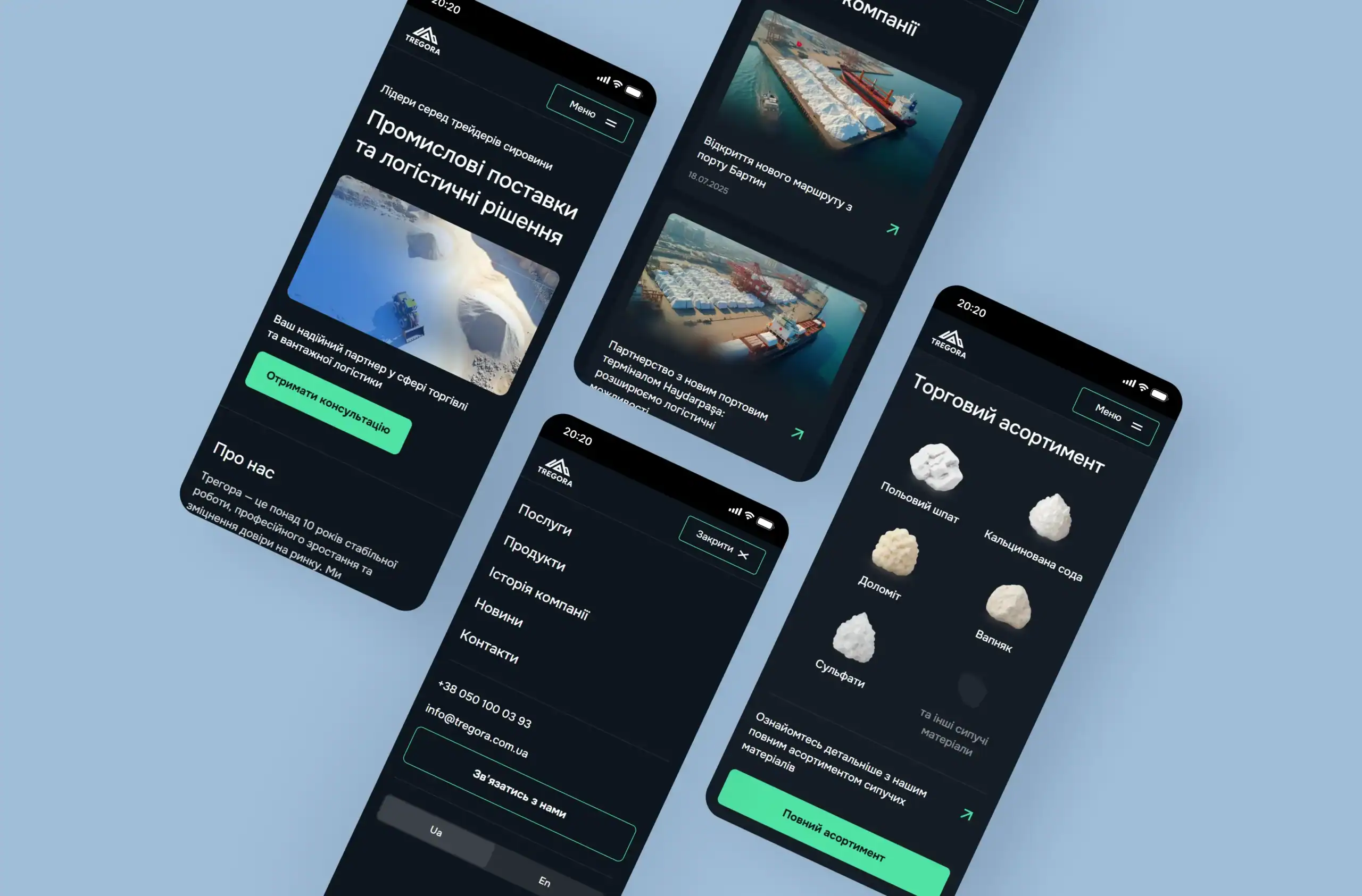
The practical impact of a well-thought-out architecture on financial results is perfectly demonstrated by our Tregora case study. For this international logistics company, we developed a B2B platform that completely transformed their corporate image and provided the team with flexible content management tools. The clear structure and interactive elements effectively attract visitors’ attention, consistently converting cold traffic into qualified leads.
We offer transparent and predictable terms of cooperation, where the final cost of the investment is based on the actual complexity of the functionality. Professional development starts from 160,000 UAH (equivalent to $4,000), and the base implementation timeline takes from two months. Below are the starting rates for key development formats:
| Project Format | Starting Cost | Estimated Timeline |
| Corporate Website | from $4,000 | from 2 months |
| E-commerce Website | from $5,000 | from 3 months |
| Brochure Website | from $2,500 | from 1 months |
| Landing Page | from $2,000 | from 1 months |
Your digital resource is capable of generating significantly more profit thanks to modern personalization technologies. Delegate the creation of a reliable, secure, and high-converting platform to experienced engineers. Submit a request to discuss the technical implementation of your project in detail with the experts at webCode.solutions.
Dynamic content automatically adapts the value proposition to the specific needs of the user from the very first seconds of a visit. This sharply reduces the bounce rate and accelerates the client’s journey through the sales funnel. As a result, the business receives more qualified leads without increasing traffic acquisition costs.
For effective personalization, the system uses the company’s own data (first-party data) and visitor behavioral factors. This includes previous session history, traffic sources, job titles, and information from the CRM system. This omnichannel approach enables algorithms to instantly create a unified customer profile in real time.
AI algorithms automatically divide the overall visitor flow into narrow micro-segments, showing each one the most relevant offer. The company stops wasting marketing budgets on non-targeted impressions and cold bounces. Thanks to the precise match to the request, the cost of generating each lead predictably decreases.
Yes, the WordPress platform is a reliable foundation for implementing complex marketing functionality thanks to its flexible architecture. Custom development with clean code guarantees the instant operation of dynamic blocks without overloading the server. The engineers at webCode.solutions integrate such solutions with a full guarantee of data security and the possibility for further scaling.
Our thoughts on business, marketing,
design, and website development.
Available for new challenges



Fill out the form