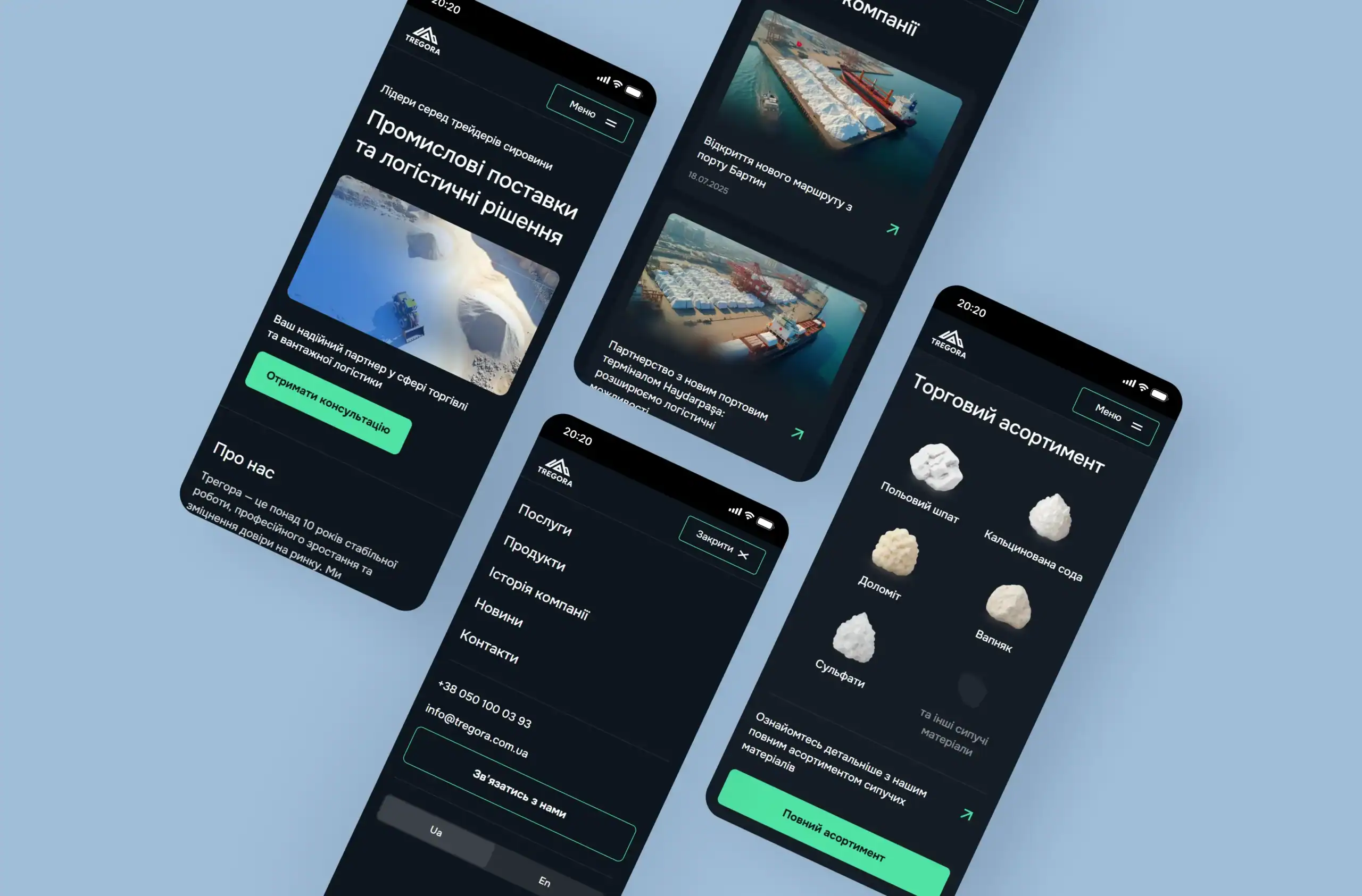
- 2025
- Corporate website
Tregora is a leader in the field of raw materials trading and logistics
04.06.2026

For stable sales scaling, a synergy of both tools is required. Instagram effectively generates initial interest and attracts a cold audience at the Top of the Funnel. A full-fledged website automates lead generation, reduces Customer Acquisition Cost (CAC), and operates independently of social media algorithms. The website acts as the primary asset for converting and retaining customers.
Many entrepreneurs launch their commercial activities through a social media page. This is a logical first step for testing demand with minimal financial risks. However, as the number of customer inquiries grows, business owners inevitably encounter chaos in Direct, lost messages, and the inability to collect accurate end-to-end analytics.
A natural question arises: what to choose — a website or Instagram for business, when basic tools are no longer sufficient? If your strategic goal is to systematize processes and increase profit without expanding your sales team, developing your own web resource becomes a mandatory stage of company growth.
Instagram remains a powerful channel for attracting traffic, but as a sole sales platform, it quickly exhausts its potential. When the number of followers and inquiries grows rapidly, a business hits a “glass ceiling” of scaling.
Why do you need a website if you have Instagram and sales are going well? The main problem lies in the lack of automation. Processing orders through direct messages requires constant manual intervention. Managers are forced to answer the same types of questions every day about pricing, service specifications, or terms of cooperation. This significantly increases response time, causing the company to lose hot leads.
The second critical factor is a strict dependence on Meta’s algorithms. The social network does not belong to your business. Changes in content display rules, a drop in organic reach, a shadowban, or an accidental account block can instantly halt all sales. Building a company solely on a rented platform means subjecting all your capital to unjustified risk.
Furthermore, the social network’s interface limits data collection capabilities. You see basic interaction metrics, but you cannot accurately calculate Return on Investment (ROI) and Customer Acquisition Cost from various advertising channels over the long term. Without accurate analytics, it is impossible to predictably manage the marketing budget and identify the most profitable audience segments.
Transitioning from social media to your own platform directly impacts a company’s financial performance. Creating a business website allows you to diversify traffic sources and reduce reliance on paid advertising. Thanks to basic SEO optimization of your pages, you begin to receive organic traffic from search engines. These clients already have established demand, so their conversion to purchase is significantly higher, and the customer acquisition cost (CAC) becomes almost zero over the long term.
Furthermore, a website unlocks access to in-depth analytics and professional retargeting. Installing Meta and Google Ads pixels allows you to track user behavior at every stage of interaction. You can show personalized ads to those who added an item to their cart but did not complete the purchase, or who spent a long time browsing a specific service. Precise targeting of advertising campaigns optimizes the marketing budget and significantly increases overall ROI.
Structured information presentation plays a critical role in building trust, especially in the B2B segment or when selling complex services. On a website, a potential buyer sees a clear hierarchy: from detailed product descriptions to legal guarantees and real case studies. Transparent terms of cooperation and clear navigation handle objections even before the first conversation with a manager. Effective lead generation is built on the user independently finding answers to their questions and submitting a request while already “warm.”
A modern website functions as a full-fledged sales department that works 24/7 without weekends or sick days. A properly configured sales funnel automatically guides the visitor from their first acquaintance with the product to filling out a form or making a transaction. Integrating the website with a CRM system ensures that every inquiry is instantly recorded in the database, distributed among managers, and assigned the appropriate status. This completely eliminates the human factor and the loss of leads due to long wait times for a response in messengers.
Sales automation is not limited solely to collecting contacts. The platform allows for the implementation of upsell and cross-sell mechanics, offering related products or premium packages during checkout. By saving the interaction history, the company can systematically remind customers about itself and offer subscription renewals or loyalty programs. This approach increases Customer Lifetime Value (LTV) and the average order value without additional acquisition costs.
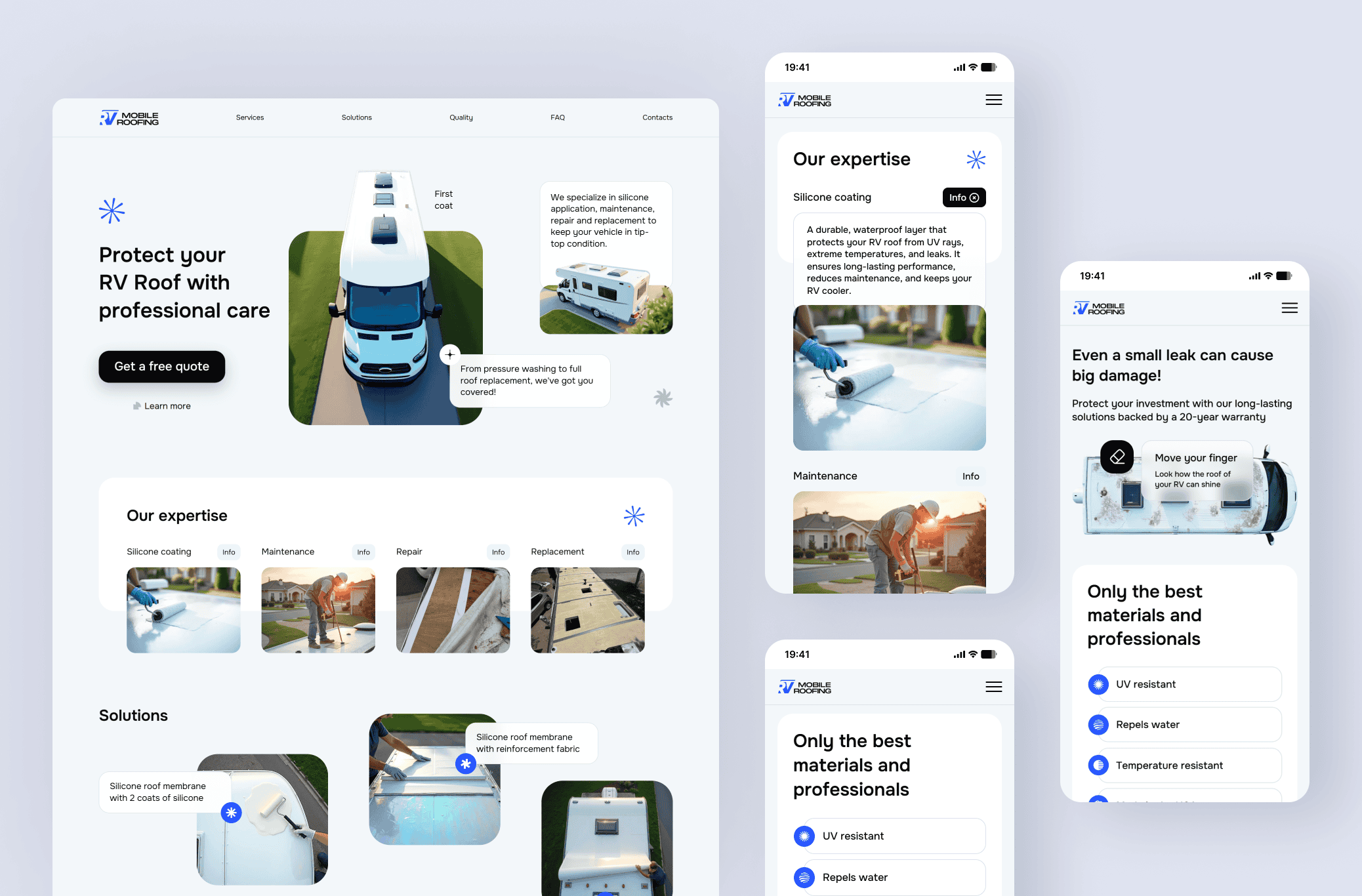
An excellent example of process optimization is our experience working with the B2B logistics company Tregora. Comprehensive corporate website development for this market leader included creating well-thought-out feedback forms. We minimized the number of fields but structured them so that the client immediately provided complete information about their needs. This solution significantly reduced the time spent on pre-sale correspondence and provided the Tregora team with high-quality leads ready for substantive negotiations.
Contrasting these two channels is often a false dichotomy. Modern marketing does not operate in an “either/or” paradigm. The question is not about choosing a website over Instagram, but rather how to build an effective omnichannel strategy. A user might discover your brand through Reels and follow your page for updates, but to complete an expensive purchase or a B2B contract, they will transition to your corporate web resource.
For clarity, let’s compare the capabilities of both platforms across key business metrics:
| Business Metric | Instagram (Social Network) | Own Website |
| Sales Funnel Stage | Demand generation, reach, warming up interest. | Converting hot leads, sales automation. |
| Asset Ownership | Rented platform. Dependence on Meta’s rules and algorithms. | Full control. Your digital asset that cannot be blocked. |
| B2B Segment Trust | Low. Suitable for micro-businesses and emotional purchases. | High. Allows posting legal information, certificates, and complex case studies. |
| Analytics and Retargeting | Basic reach, content interactions. | Accurate end-to-end analytics, CAC and ROI calculation, tracking targeted actions. |
| Traffic Scaling | Limited to targeted advertising and algorithm organics. | SEO optimization, contextual advertising (PPC), Google Shopping. |
An omnichannel approach implies that each tool performs its own function. Instagram acts as a storefront and a tool for brand communication, while the website handles transaction processing, data storage, and the presentation of complex expert services.
Business owners often postpone developing their own platform, believing it is not the right time. Do a quick self-diagnosis. If at least one of the statements below describes your current situation, it is time to change your strategy and choose between leaving things as they are or investing in a platform for growth.
The choice of format — a website or Instagram for business — depends on the company’s lifecycle stage. Social media is enough to start; for systemic earnings and stability, you need your own infrastructure.
Abandoning Instagram in favor of a website is a flawed strategy. The secret to stable scaling lies in a well-planned synergy of both tools. Social media acts as a powerful traffic source, a platform for building brand awareness and fostering loyalty. However, it is the creation of a business website that forms the company’s independent digital asset. This asset reliably converts the attracted traffic into sales and protects you from unpredictable algorithmic changes on third-party platforms.
Your own platform provides full control over data, allows you to accurately calculate lead acquisition costs, and automates routine communication processes. Instead of expanding your team of managers to answer basic questions in Direct, you invest in a tool that processes inquiries around the clock. This optimizes operational costs and systematically increases the lifetime value of each customer.
For a web resource to truly generate profit and not just exist online, its design must be based on a deep analysis of your niche and the behavior of your target audience. Professional development of a corporate website or a high-converting promo landing page requires expertise in UI/UX, business analytics, and technical optimization. Our team creates custom WordPress-based solutions focused exclusively on achieving your financial goals.
If you are ready to break the “glass ceiling” of social media sales and move lead generation to a systemic level, entrust this task to the experts. We will analyze your project, select the optimal format, and develop a tool for scaling your company. Fill out the form below to receive a detailed consultation.
For testing a niche with a minimal budget at the start, Instagram is a better fit. However, when a company receives a stable flow of inquiries and needs scaling, sales funnel automation, and in-depth analytics, developing a full-fledged website becomes critically necessary.
Your own web resource allows you to gain free organic traffic through basic SEO optimization. Furthermore, integrating analytics pixels enables precise retargeting to a warm audience, which optimizes the marketing budget compared to constantly buying cold traffic on social networks.
In the B2B segment, the deal cycle is longer, and clients require more rational arguments. A website allows you to structure complex technical information, post case studies, legal documentation, and well-thought-out lead generation forms, which handles partner objections even before the negotiation stage.
No, an omnichannel approach yields the best results. Social networks continue to generate initial interest and build brand loyalty (Top of the Funnel), while the website takes over final lead conversion, data collection, and sales automation.
Our thoughts on business, marketing,
design, and website development.
Available for new challenges



Fill out the form