- 2025
- Corporate website
Tregora is a leader in the field of raw materials trading and logistics
30.07.2026

Website integration with CRM and ERP is the setup of direct data exchange between a company’s web resource and its internal management systems. This solution eliminates manual data entry, instantly forwards leads to managers, and transforms the platform into a tool capable of generating sales without constant staff intervention.
A static page that merely presents the company loses its profitability for medium and large businesses. Competition demands an instant reaction to customer inquiries. When requests get lost in corporate emails or take hours to be transferred to the database, the company inevitably loses profit. Scaling a business becomes impossible if operational chaos in the sales department grows proportionally with traffic.
Professional corporate website development involves creating a digital hub that takes over routine back-office tasks. Instead of expanding the administrative staff, you invest in a system that operates flawlessly 24/7. This is a fundamental step toward building a predictable and manageable customer acquisition model.
Connecting a customer relationship management system directly to a web resource radically changes the workflow logic of the commercial department. The main benefit lies in the complete elimination of the human factor from the contact collection stage. Managers no longer need to copy data from various sources — lead generation automation ensures that every new request ends up in the right funnel instantly and with a complete set of UTM tags.
Implementing such a connection provides a business with three key advantages:
This approach turns raw traffic into ready-to-process contracts. The sales department focuses exclusively on negotiations and closing deals, rather than administering spreadsheets.
Connecting an ERP to a website directly impacts the speed of operational activities and the stability of the entire back office. When a web resource is synchronized with an enterprise resource planning system, the company gains a single source of truth for all departments. This means automatic updates of warehouse inventory, real-time adjustment of complex B2B pricing based on contract volume, and the instant generation of supporting documentation.
Business process automation at this level is a critical condition for safe scaling. Managers no longer need to manually check product availability before confirming an order or independently generate invoices in third-party programs. The system performs these operations in a matter of seconds, eliminating the risk of selling out-of-stock items. As a result, time-to-market — the time from the client’s decision to the actual start of the company fulfilling its obligations — is significantly reduced.
For the end buyer, this architecture creates a completely seamless customer experience. The customer sees up-to-date information in real time, receives instant status confirmation, and enjoys transparent communication at every stage of the deal. Consequently, the company not only reduces the administrative burden on its staff but also increases brand trust, building a stable base of loyal B2B partners.
The main argument in favor of complex web development is a clear and predictable return on investment (ROI). When a company systematically optimizes routine tasks, it directly impacts key financial metrics. The most noticeable result is a rapid reduction in customer acquisition cost (CAC). Thanks to instant digital lead processing, the marketing budget is no longer wasted on expensive leads that a manager simply failed to process on time due to the human factor.
Global cost optimization also occurs through a logical reduction in payroll. Instead of hiring additional administrators to manually transfer data from emails into disparate databases, you invest in a system that operates 24/7. The freed-up resources of the sales department are directed exclusively toward high-quality work with existing clients. This level of service stimulates repeat sales and systematically increases the company’s lifetime value (LTV).
To visually assess the financial and operational differences, let’s compare activities in two management paradigms:
| Process | Workflow without integrations | Website integration with CRM and ERP |
| Lead processing | Manual contact transfer with a 2-4 hour delay | Instant deal creation with an assigned manager |
| Cost calculation | The manager spends a long time clarifying prices and stock across departments | The client sees up-to-date data; the system generates the invoice automatically |
| Marketing evaluation | Difficult to determine exactly which ad brought real revenue | End-to-end analytics shows the exact ROI of each traffic source |
| Scaling | Target traffic growth requires hiring new administrators | The digital ecosystem withstands any load without new hires |
The market offers numerous ready-made templates, but they rarely meet the specific needs of medium and large businesses. The webCode.solutions team builds B2B websites with integrations based exclusively on custom development. We use WordPress without page builders, hardcoding the system interaction logic individually for each project. This approach ensures stable architecture performance during scaling and maximum corporate data security.
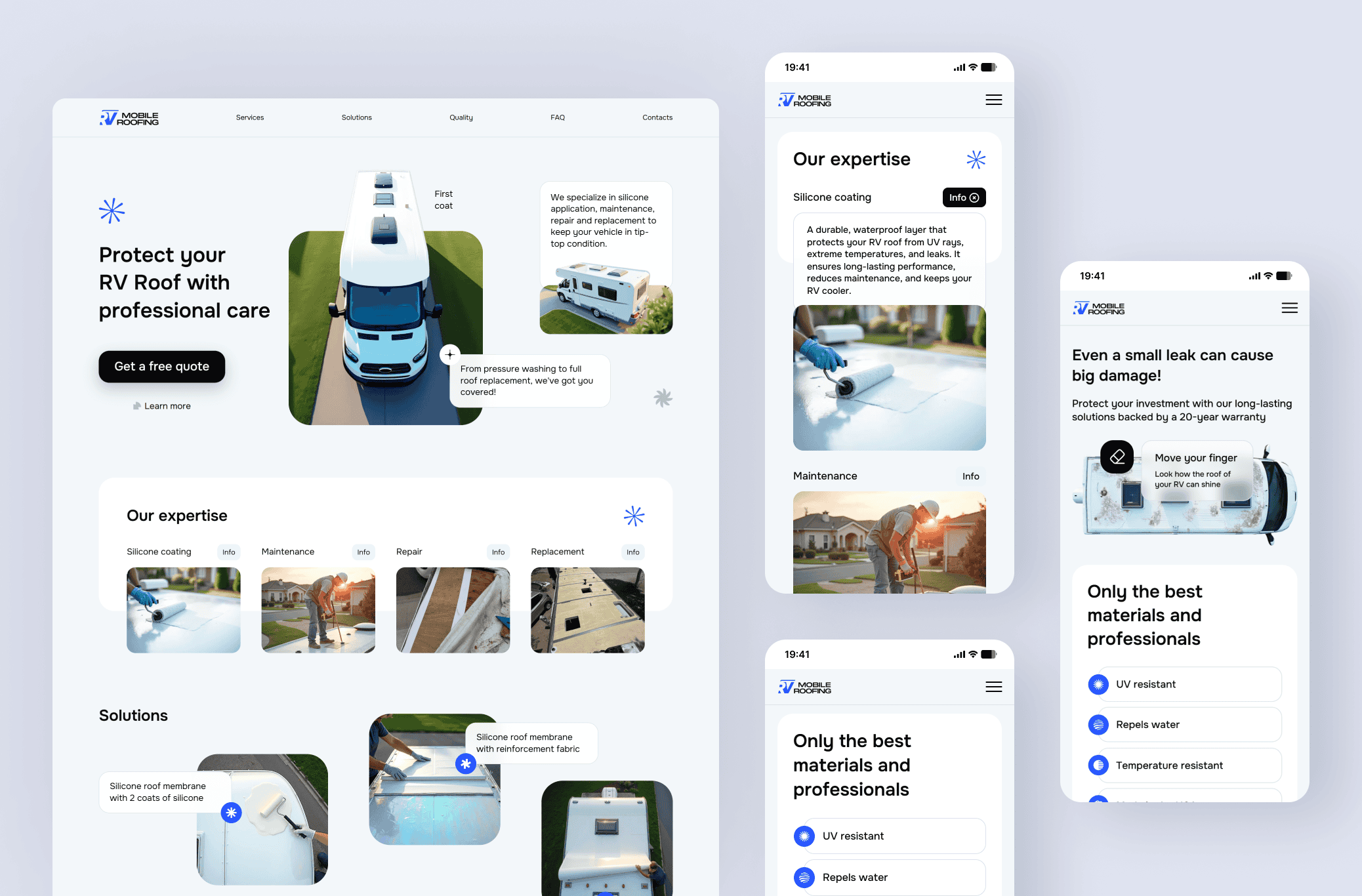
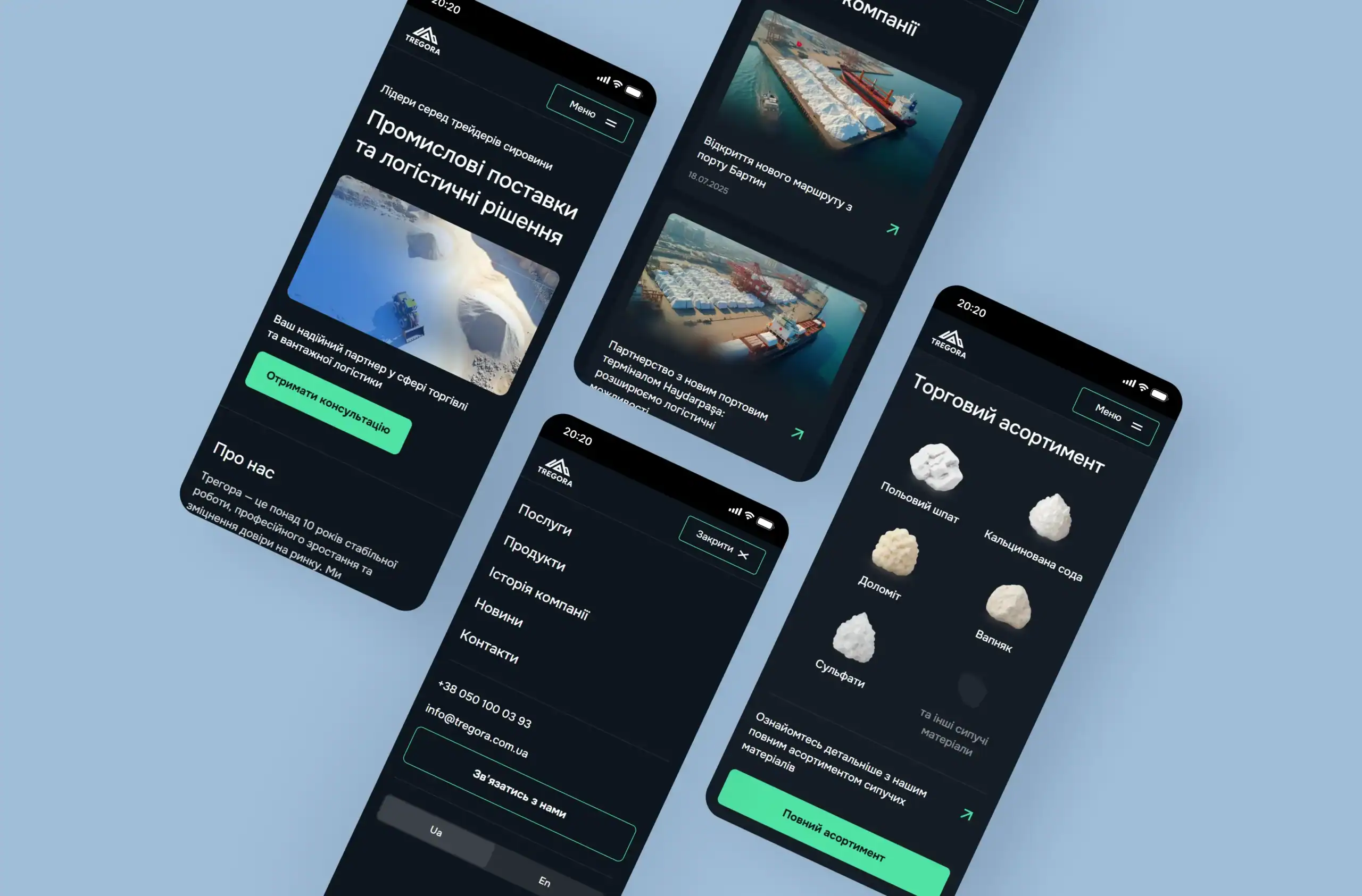
A prime example of transforming a web resource into a lead generation tool is our corporate website development case study for the logistics company Tregora. This international trader needed a platform that would reflect its leadership status and automate lead collection. We implemented a comprehensive ecosystem where a well-thought-out structure and unobtrusive feedback forms minimize time spent on pre-sale communication. As a result, the conversion of traffic into real contracts increased significantly, and the company acquired a tool for autonomous content management.
Financial planning for such projects requires an understanding that the cost of CRM and ERP integration directly depends on the complexity of the business logic. The main pricing factors are the number of systems to synchronize, the availability of an open API, and the need for custom data processing prior to transmission. The more non-standard scenarios your sales department has, the deeper the expertise required to set up data exchange.
At webCode.solutions, the development of a full-fledged corporate website with basic integrations starts from $4,000. The implementation timeline for such a project takes from two months. During this time, we conduct deep business analytics, design the database architecture, and set up seamless lead transmission. These investments pay off quickly by freeing up team resources and minimizing lost deals.
Today, a website cannot afford to remain just a digital brochure with contacts. In a highly competitive environment, it is a fully-fledged commercial asset that must generate profit and optimize operational processes. Integrating a website with CRM and ERP transforms disparate communication channels into a single predictable sales ecosystem.
Companies that ignore automation continue to lose leads due to processing delays and waste marketing budgets. Conversely, the timely connection of management systems allows you to confidently scale the company without proportionally inflating the staff. You create a seamless customer experience for clients and gain transparent analytics for management decisions.
Creating such an infrastructure requires not only writing clean code but also a deep understanding of back-office operations. Instead of experimenting with template solutions, delegate the development of your corporate platform to a team of professionals. We will design an architecture that works to reduce your costs and steadily increase conversions.
Modern open-architecture platforms, such as WordPress, support integration with most popular management systems, including Salesforce, HubSpot, KeyCRM, Odoo, SAP, and others. The main requirement is the availability of an open API (REST or SOAP) in your internal system to configure a two-way data exchange. The webCode.solutions team writes custom connection logic, which guarantees seamless synchronization without the use of unstable third-party plugins.
Yes, the data transfer process is absolutely safe, provided the architecture is properly designed and end-to-end encryption (SSL/TLS) is used. Integration via private API keys and webhooks eliminates direct access from the external website to the enterprise’s internal server database. This reliably protects commercial and client information from leaks or unauthorized interference.
Automation instantly records every request in the database and immediately assigns a responsible manager, eliminating the risk of losing a lead due to processing delays. This means the marketing budget is spent as efficiently as possible, rather than being wasted due to the human factor. Since a higher percentage of incoming traffic converts into closed deals, the overall cost of acquiring one successful contract (CAC) decreases proportionally.
Our thoughts on business, marketing,
design, and website development.
Available for new challenges



Fill out the form