- 2025
- Corporate website
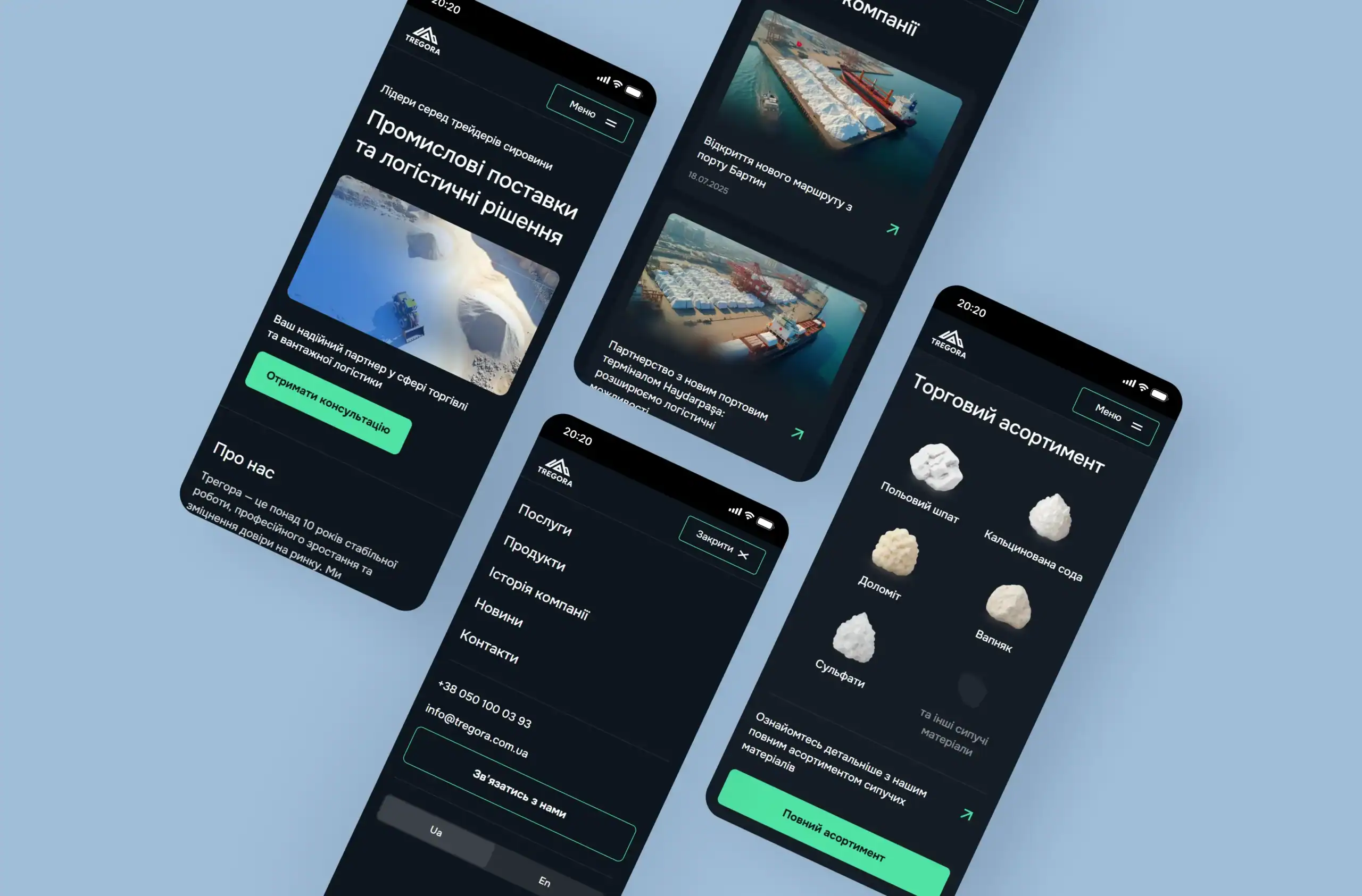
Tregora is a leader in the field of raw materials trading and logistics
03.07.2026

AI business automation is the strategic process of delegating routine operations to intelligent algorithms to increase profitability. It allows companies to scale sales, improve customer service, and process more leads without increasing payroll. This is a direct path to reducing customer acquisition costs and optimizing expenses.
Startups and small businesses operate under tight budget constraints. The traditional growth model requires the constant hiring of new employees in proportion to the expanding customer base. This approach quickly depletes a company’s financial reserves, as payroll consumes the lion’s share of profits. A modern alternative is optimizing business expenses through the implementation of algorithms at the early stages of development.
AI takes over repetitive tasks, freeing up the core team’s time for strategic planning, seeking partnerships, and product development. The fundamental advantages of this approach are:
Every new lead has a price. When a company relies exclusively on the manual labor of sales managers and marketers, customer acquisition costs inevitably rise as advertising campaigns scale. Business process automation using smart algorithms fundamentally changes this math. Artificial intelligence independently qualifies leads, conducts initial communication, and nurtures user interest until human intervention becomes truly necessary.
This directly impacts the reduction of CAC (Customer Acquisition Cost). Your sales department spends its working time only on hot leads ready to close a deal. The need to pay for hours spent on cold calls or routine answers to common questions disappears. Simultaneously, the overall operational efficiency of the company increases, as the existing staff generates more profit.
Instead of expanding first-line support staff, a business invests in a technological foundation—for example, commissioning the development of a corporate website capable of seamlessly integrating smart widgets, scoring systems, and a CRM. Such an infrastructure scales without a proportional increase in expenses for taxes, recruiting, and setting up new workspaces.
| Criterion | Traditional Scaling (Hiring Staff) | AI Automation |
| Processing requests | Linearly depends on the number of managers | Simultaneous processing of thousands of requests without delays |
| Customer Acquisition Cost (CAC) | Constantly increases due to payroll growth | Decreases due to the fixed cost of IT tools |
| Response speed | Limited by work schedules and workload | Instant response 24/7 |
| Operational efficiency | Drops during sharp workload peaks (seasonality) | Remains consistently high regardless of traffic |
The speed of entering the market often determines the financial success of a new product or service. The traditional launch cycle involves lengthy stages of approval, content creation, prototyping, and testing. Using AI allows for a radical reduction in time-to-market, turning weeks of waiting into days.
Algorithms can quickly generate positioning options, create basic texts, and visual concepts to test marketing hypotheses. This enables the instant launch of advertising campaigns and the collection of initial data on audience interaction. Instead of months of planning, the business moves to rapid iterative work, which reduces financial risks.
Besides speed, artificial intelligence directly impacts sales metrics. High-quality lead generation today is impossible without deep personalization. Algorithms analyze user behavior on the site, their previous queries, and interests to form customized offers in real time.
How exactly AI accelerates processes and increases conversion:
Successful implementation of artificial intelligence begins with the targeted optimization of the most resource-intensive departments. You should not try to digitize all business processes simultaneously. The fastest ROI is demonstrated by solutions that close bottlenecks in the sales funnel and communication.
Automating the collection and initial qualification of leads is a step that yields an immediate financial result. Instead of managers spending hours figuring out a customer’s basic needs, these tasks are performed by smart forms, interactive questionnaires, and chatbots.
An excellent example of such resource optimization is the case of developing a corporate website for the logistics company Tregora. For this B2B leader, we implemented well-thought-out feedback forms that collect complete information about cargo specifics and customer needs even before the first contact with a manager. This significantly reduced the time spent on pre-sale correspondence and improved the quality of inquiries, allowing the sales department to focus exclusively on closing deals.
AI assistants are capable of closing up to 80% of standard inquiries without involving call center operators. This applies to requests regarding order status, delivery conditions, service characteristics, or basic onboarding. Support works around the clock, which is critically important for international business. Algorithms are trained based on the company’s existing regulations, providing accurate and fast answers to every user.
Businesses generate a vast amount of data that often remains unused due to a lack of competencies to process it. Analytical AI systems continuously monitor user behavior on corporate resources and the effectiveness of advertising channels. This allows for timely adjustments to the marketing strategy, disabling unprofitable campaigns, and scaling those that bring in the cheapest customers. The marketing department receives not just dry reports, but specific insights for management decisions.
Successful integration of digital solutions begins with an audit of the current infrastructure. Scaling a startup using artificial intelligence without preparing a reliable technological foundation inevitably leads to cash flow gaps. The chaotic implementation of disparate services only increases operational costs, slows down systems, and creates problems with synchronizing customer data.
For intelligent algorithms to consistently work towards reducing CAC and increasing overall ROI, the digitization process must be structured:
Any AI business automation critically depends on the quality of the infrastructure on which it is deployed. Modern algorithms continuously collect user data, analyze their behavior, and form personalized offers to maximize LTV. However, these intelligent tools turn into an unnecessary expense line if the platform itself is technically incapable of supporting them.
A user will never see an individual product offer if the page takes more than three seconds to load. A smart lead generation form won’t be able to transmit data to the CRM system if the resource’s architecture contains script conflicts or ignores modern security protocols. That is why the first and most important step towards reducing operational costs is creating a technologically robust web platform.
A properly designed resource operates as the fully-fledged core of your business ecosystem. Custom development guarantees scaling without a loss of speed. When a business grows and requires the integration of complex AI algorithms or end-to-end analytics systems, such a website easily adapts to new tasks. Using clean code without being tied to closed template SaaS builders provides the business with full control over its assets and guarantees complete independence.
Instead of burning financial resources on futile attempts to combine outdated technologies with new algorithms, delegate architectural tasks to a specialized partner. Professional corporate website development or creating a highly specialized resource designed for high loads is a reliable investment in a company’s stable growth. We build custom solutions with clean code that solve business problems and seamlessly integrate with AI services, allowing business owners to focus on strategic management.
The return on investment (ROI) for process digitalization typically ranges from 3 to 6 months. This rapid payback is achieved through an immediate reduction in customer acquisition cost (CAC) and the delegation of routine tasks to algorithms without increasing payroll.
No, modern AI tools and SaaS solutions are designed to operate autonomously without requiring technical specialists on your end. The primary prerequisite is having a reliable technological foundation and a well-developed corporate website that allows for the seamless integration of these services.
Smart CRM systems, interactive scoring widgets, and AI chatbots for initial communication have the greatest impact on conversion. They automatically qualify inbound website traffic and pass only nurtured, purchase-ready leads to the sales department.
The implementation of artificial intelligence must begin with a process audit and the identification of bottlenecks where the team loses the most time. After that, the technological platform (website speed, clean code, API integration setup) is optimized to ensure the correct operation of the algorithms.
Our thoughts on business, marketing,
design, and website development.
Available for new challenges



Fill out the form